Observations from a Serious Journalist
Interview with Claudia Dreifus

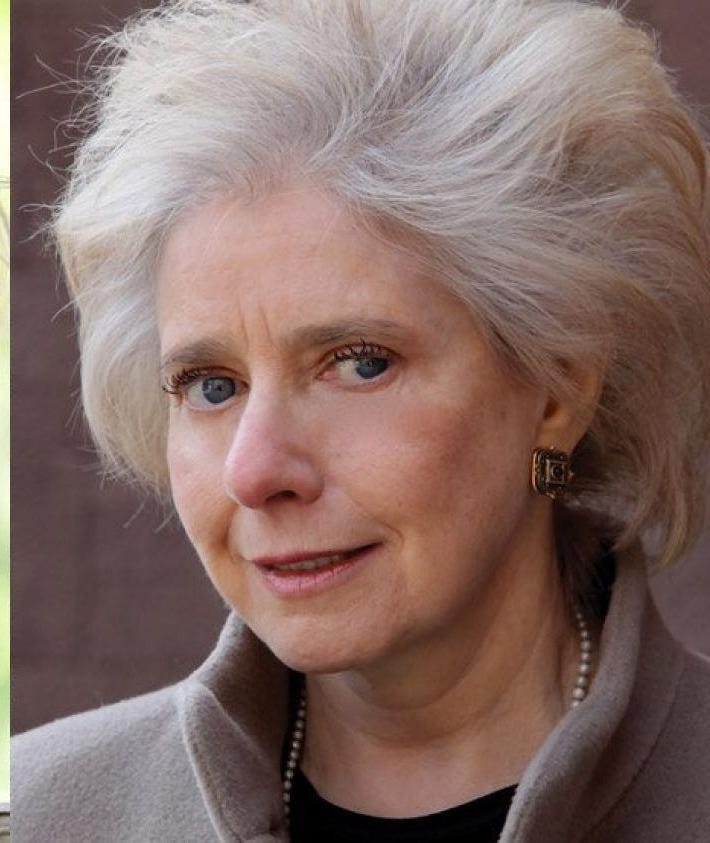
Sometimes we humans take for granted the very quiet, unheralded profession of print journalism. Some folks do the daily hard work of seeking out information and holding people in power accountable for their actions. The print journalists don’t get the same attention as the broadcast journalists.
But they are the true backbone of fact-finding. I had the privilege recently to interview author and journalist Claudia Dreifus, one of the hardworking reporters working behind the scenes. She has been a consistent contributor through numerous print publications and digital outlets, including the New York Times, New York Review of Books, Quanta, and CNN.
She won numerous awards and citations for her science writing, her amazing interviews, and her coverage of women’s issues. She’s beloved and respected by her colleagues and also works to impart journalism skills to grad students at Columbia University. She is known as a gifted interviewer and someone who has made scientific information and progress accessible to all due to her discipline and clear writing styl
Phyllis: Claudia, it is such a pleasure to get to talk with you again. You’re a fellow journalist I knew years and years ago. I am delighted to have witnessed your remarkable career. I would love to get your thoughts about the direction journalism and broadcast journalism have taken today.
It feels like a very different world from when you and I started in the field (in the 1970s.)
Claudia: Indeed, it’s a very different world. I think we both were pioneers for women in our time, when there weren’t very many women with public voices. And when just to be in public and to have a voice was revolutionary.
The public square wasn’t as much a male public square as football is. And women didn’t have much authority. And I, I remember watching you on TV, Phyllis, and thinking “she’s doing it, she’s speaking up, she’s being heard.” How important that was.
Phyllis: Do you feel a sense of loss in the business of news?
Claudia: Absolutely.
Phyllis: What are your observations?
Claudia: One of the things we know is that. When authoritarianism takes over, there’s less news.
And if you go to authoritarian countries, there are very few newspapers. There’s state-controlled television. And I fear that we, for a variety of reasons, we in America are becoming that.
Our news sources are more limited when we think of some of the great things that journalism did in its time, which includes coverage of the civil rights movement, which includes, Watergate, and coverage of the Vietnam War.
There was so much more (coverage) then than there is now. I think one of the reasons why the response to the shooting war that we’re all in the middle of now is so limited is that news sources are limited and getting more consolidated. And this isn’t just the work of authoritarianism. It’s those who want to control what we all read and think.
But it’s also a silent process that technology has brought on economic consolidation. There are so many fewer newspapers there than there were when we were starting out. There really are only three major ones now. Many local communities don’t have newspapers or television news. Sad!
The people who see themselves as news channels are more talk than they are news. I’m shocked that whenever I watch CNN or MSNBC, they’re mostly interviewing each other. They are not going out and getting direct news themselves. They’re interviewing other correspondents from the stations, or they’re interviewing reporters from The Times or the Wall Street Journal who are covering the stories, but they’re not going out in the field and getting those stories, and that’s a great loss.
I’m not so much interested in journalists covering each other, and so much of it is just opinion. Rather than direct news, we need to know what’s happening in our society, what’s happening at the nitty-gritty grassroots levels. Sometimes MSNBC or its successor does that well, but sometimes they just totally fall down on the job and you feel like they’re lazy, that they don’t have any producers or something. They’re just interviewing the same people and often each other.
Phyllis: So you are a writer with real experience, and you’ve definitely survived this industry for many years and continue to write.
What is it that keeps you going? What is your inspiration, despite the nature of the business, that keeps you contributing?
Claudia: Allow me to tell you a story. I was in a jury pool some years ago. One of the other women in the jury pool said to me,” You are very proud of being a journalist, aren’t you?”As if I were engaged in some nefarious, awful work.
And I said, "You bet. I’m proud. We’re the foot soldiers of the First Amendment and we are, and we give people good information. By which they can make good decisions and be a part of society.”
And, I’m a second-generation American.
My family were refugees. And so I grew up understanding the preciousness of democracy and wanted to participate in a way that I could. And telling true stories about the world we live in is my way.
I’m not a good political organizer. I’m a terrible political organizer. My first job out of college was as a union organizer for 1199 Drug and Hospital Workers of New York.
I did that because I wanted to stay in the Civil Rights movement and stay connected to civil rights work. But I was the world’s worst union organizer, really bad at it.
And, somebody in my family is sick right now at NYU hospital, and I keep on saying to this person when I visit them, I know this hospital I used to organize here, but not successfully. I know these hallways; I used to hide out in the bathroom and give leaflets to people as they came.
Phyllis: Let’s go back before that. There’s a remarkable photograph of you among Freedom Fighters and the Civil Rights Movement.
How did you get involved in that? What drew you to being part of that? What pulled you there?
Claudia: The date of the photograph is April 6th, 1963, which turns out to be the same day as the day that people were being doused by water cannons in Birmingham,
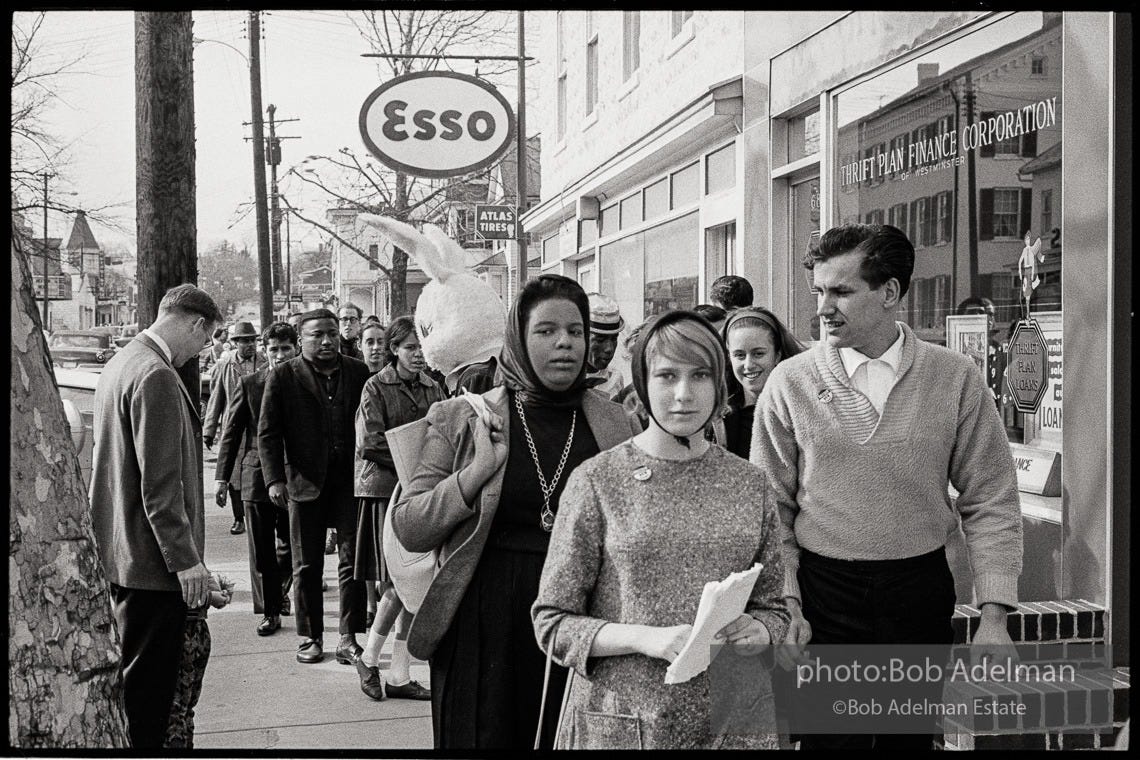
and those pictures that we all know of people being bitten by police dogs. That was going on that day, and that day I went with people from Brooklyn Corps and NYU Corps, the Congress of Racial Equality, to Maryland to integrate restaurants in a rural town, which was famous for being a Klan center.
I was 18. I didn’t tell my parents ‘cause they wouldn’t have approved, not that they disapproved of being involved in the civil rights fashion, but they were Holocaust survivors. They were survivors of the Nazi regime, and they were terrified of arrest or saying no to authority. So I just didn’t tell them I was a freshman in college.
I said I was staying over at a girlfriend’s house, and I hopped on the bus. The thing that drew me was my family’s background. I could see the clear link between what happened to Jewish people in Germany and the way blacks in the US were being treated, and the links are very strong. My Aunt Inga, who arrived in America in 1938 from Cuba, where she had escaped from Berlin to Cuba on the ship immediately before the St. Louis (which was forced to return to Europe with Jews fleeing Nazi Germany)
So if she had taken one ship later, as her father had urged her, she wouldn’t have gotten here. My Aunt Inya had to stay in Cuba for a few weeks and then took the ferry to Miami. She got off the ferry, and she sat down on a bench, and she immediately saw that she had sat down on the wrong bench.
In Florida in the 1930s, she thought, “Oh my God, this is just like home.” She had sat down on the bench for Black people, and that’s welcome to America for the first member of my family to be able to escape and come here. I’ve never forgotten that, even though I was born here. I’ve never forgotten my auntie's story.
And for me, it’s always been very vivid and clear that a commitment to human rights wherever they are has to be central to who I am. I was born in the middle of the war. If I’d been born in Europe, I wouldn’t have lived. A million Jewish babies were murdered throughout those years.
And I’m keenly aware of that. It’s an obligation. It’s an obligation to make the world fairer, safer, and more just…..
Here is my entire interview with Claudia Dreifus:
Inspiring. We need an army of Claudia's to take back the narrative.
True journalism from the heart. I agree that sharing our stories is essential. Stories we live. They all matter. Thank you for doing what you do finding the stories, sharing them like a sprinkle of light.